How do you get genuine employee buy-in before a company event?
You get genuine employee buy-in before a company event by involving people in the planning process early, giving them real choice over the format, and communicating clearly why the event matters. Buy-in is not manufactured through enthusiasm in a group email. It is earned when employees feel the event was shaped with them, not handed down to them. The questions below unpack each stage of that process.
Why do employees resist company events in the first place?
Employees resist company events primarily because mandatory attendance removes the one thing that makes any activity enjoyable: choice. When participation is compelled rather than invited, research on workplace autonomy shows that intrinsic motivation disappears almost immediately. The activity itself becomes secondary to the feeling of having no say in the matter.
Three factors compound this resistance. The first is a trust deficit: forced social events can feel less like a reward and more like surveillance wearing a party hat. The second is time pressure: employees with real deadlines experience mandatory events as stolen hours, not gifts. The third is cultural disconnect. Diverse teams include people with very different relationships to specific activities, and a one-size-fits-all format will always leave some people feeling excluded before the event has even started.
There is also a cumulative effect worth understanding. Each poorly received event makes the next one harder to sell. Employees remember, and they protect themselves accordingly. This is why the format of your event matters just as much as the intention behind it. An event built around genuine participation, where people can engage at their own level, breaks that cycle. One that simply replicates the same awkward format reinforces it.
How early should employees be involved in event planning?
Employees should be involved in event planning from the very beginning: before the format is fixed, before the venue is booked, and before the date is announced. Organizational research on buy-in consistently finds that cascading decisions from the top down fails in complex teams. If people are to genuinely commit to something, they need to feel they shaped it.
In practice, early involvement does not require a committee or a lengthy consultation process. A short survey asking employees which types of activities they find engaging, which time of day works best, or what they want to get out of the event takes ten minutes to build and signals that their input will actually be used. That signal alone shifts the dynamic from “event being done to us” to “event we helped create.”
The earlier you involve people, the less disruption you face later. Teams that bring employees into the design phase, even at a light-touch level, report smoother logistics, higher attendance, and less last-minute friction. Involvement is not just a morale gesture. It is a practical planning tool.
What types of activities get the broadest employee participation?
Activities that offer multiple ways to engage, rather than a single format everyone must participate in together, consistently achieve the broadest participation. The most inclusive events do not mandate universal involvement in one activity. They create a range of options, let people gravitate toward what suits them, and bring the group together at natural shared moments.
Practically, this means building events with variety built in. Some employees want high-energy, competitive experiences. Others prefer something social but lower-stakes. The strongest formats accommodate both in the same venue, at the same time, without making either group feel like the odd one out.
Activities that reward diverse skills, creative thinking, communication, problem-solving, and quick reactions, tend to outperform purely physical or purely competitive formats. When no single skill set dominates, more people find a way to contribute and feel genuinely included rather than just present.
The Cave Showroom in Otaniemi is a good example of how this works in practice. The space combines racing simulators in the Engine Room, ten gaming PCs and a streaming setup in the Game Room, karaoke, VR, and a poker table, all within the same venue, bookable as a private space for a team day. Employees who want to compete on the simulator can do exactly that, while others find their version of fun elsewhere in the same room. Nobody is forced into a single activity, and the whole group stays together.
How do you communicate a company event so people actually want to attend?
You communicate a company event effectively by explaining the why before the what. Employees respond less to an event announcement than to a clear, honest explanation of why this particular event is happening, what it is designed to do, and what is actually in it for them. Neuroscience research shows that transparency activates the brain’s reward centres: when people feel informed and included, they are far more likely to engage than resist.
The format of the communication matters too. A calendar invite with a subject line and a location does not build anticipation. A short message that describes what the event will actually feel like (what people will do, who will be there, what is genuinely new about it) gives employees something to look forward to. Drop hints through internal channels in the days before. Share something specific about the experience rather than a generic description of the agenda.
Leadership presence is one of the strongest signals you can send. When senior people show up and stay, not for a five-minute appearance before slipping out, it tells the rest of the team that the event is genuinely valued. Peer influence works the same way. When respected colleagues are visibly enthusiastic about attending, others follow. Build that momentum deliberately rather than waiting for it to appear on the day.
What should organizers do after the event to sustain engagement?
After a company event, organizers should act on what they heard, share what happened, and close the feedback loop quickly. The engagement generated during a well-run event fades fast if nothing follows it. Sending a short survey within 24 to 48 hours, sharing photos or highlights internally, and following through on any commitments made during the event are the three actions that turn a one-day experience into lasting momentum.
Follow-up signals that the event was taken seriously. Employees who see their feedback acknowledged, even briefly, are significantly more likely to participate in the next event. Those who see nothing happen after submitting feedback learn not to bother next time. The post-event phase is where trust is either built or quietly eroded.
Sharing photos and highlights also serves a practical purpose: it creates a record of what the event actually looked like. For employees who attended, it reinforces a positive memory. For those who did not, it builds genuine curiosity about what they missed. That curiosity is one of the most reliable drivers of participation at future events.
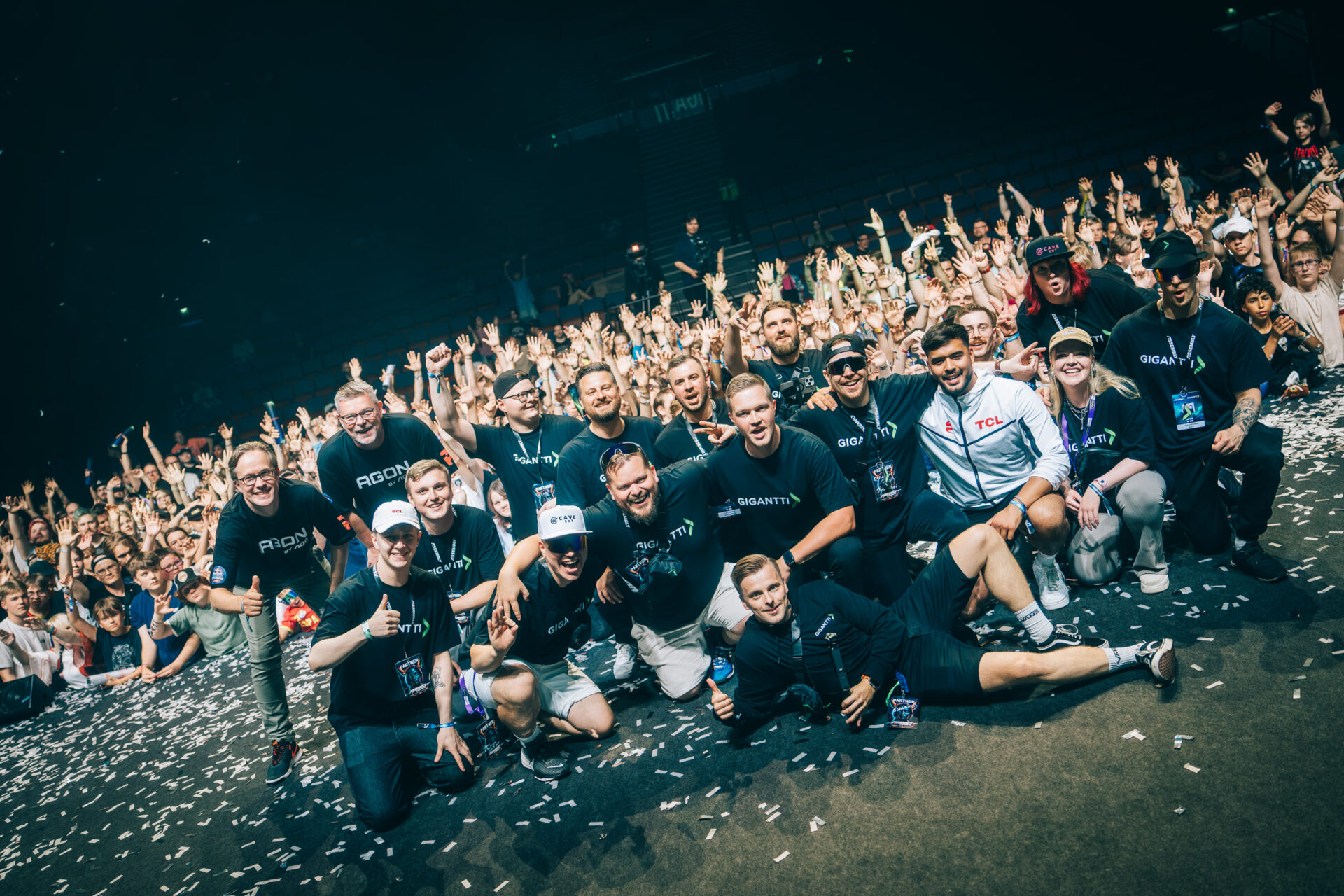
The Gigantti team put it plainly in their feedback after working with us: “From event planning to post-event follow-up, their operation is highly professional and efficient.” That end-to-end approach, from first concept through to closing the loop, is what makes events land properly rather than disappear into the week after. You can see more of how we work across our client references.
If you are planning a team event and want to build something employees will actually look forward to, we are happy to help you think it through, even if the idea is still taking shape. Get in touch with us with your team size, preferred dates, and any format ideas you already have in mind, and we will take it from there.